
Joints & pain
- Knee and joint osteoarthritis
- Neck and back pain, case by case
- Always alongside your other care
Pulsed electromagnetic field therapy
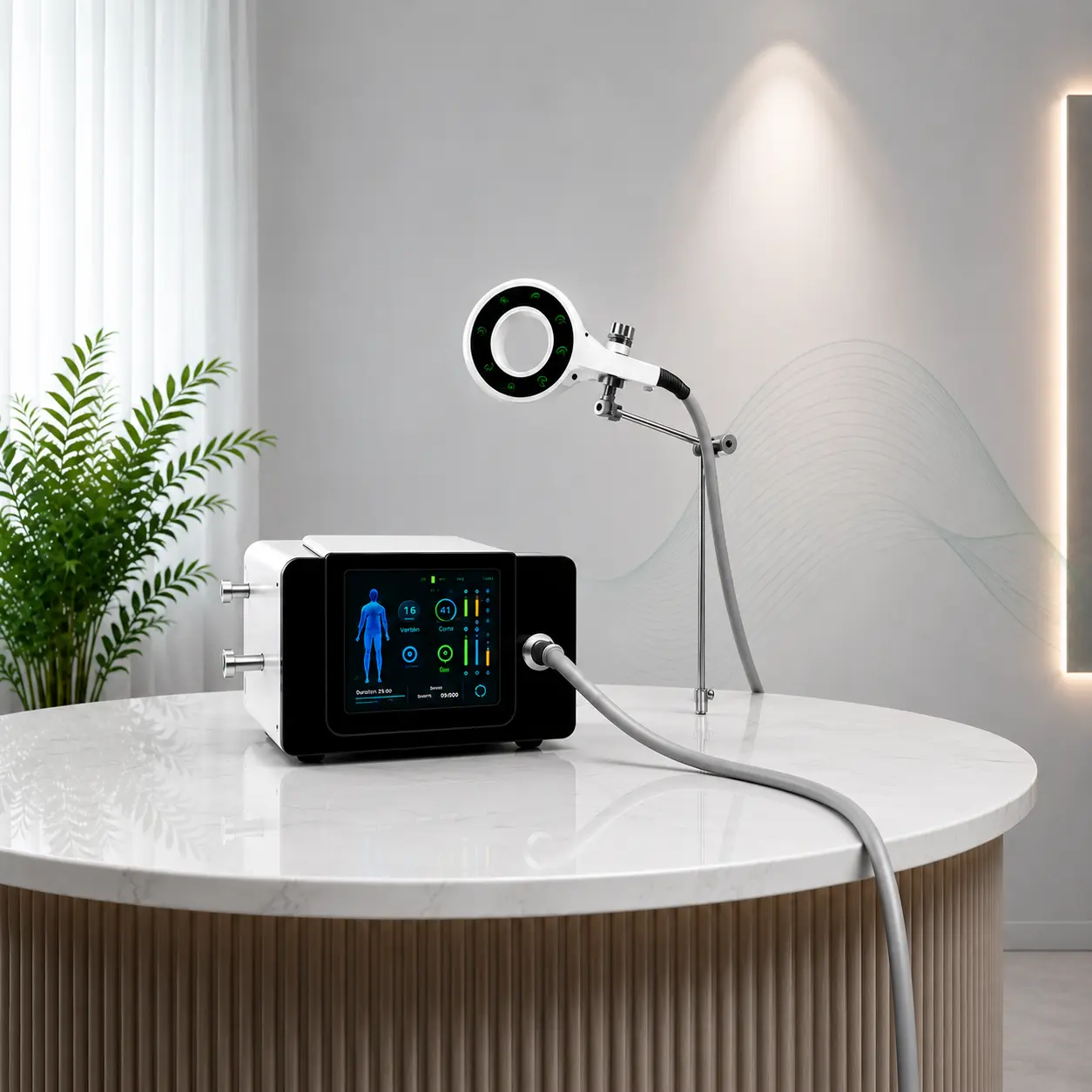
PEMF uses pulsing magnetic fields that pass painlessly through your body. It may help some joint pain and support recovery. At Mitogenez it supports a doctor-led plan; it is never the whole plan.
The idea
Your cells use tiny electrical signals to communicate and repair. A pulsing magnetic field creates very small electrical currents in tissue, which may influence those signals. PEMF has long been used in medicine to help some slow-healing fractures, and studies suggest it may also ease pain in conditions like knee osteoarthritis. How well it works varies with the device, the settings and the person.
How it works
You lie on a mat or have a pad placed near the area. A device sends gentle magnetic pulses through the tissue.
The changing field creates tiny electrical currents in your tissue, well below anything you can feel.
Research suggests this may influence inflammation, blood flow and bone repair. The effect is gradual and varies from person to person.
Your session
Session length
Typically 20–30 minutes
How it feels
Usually nothing, or a faint tingle or warmth; you rest throughout
Course
A series of sessions, set and reviewed by your doctor
Before you start
A physician screens you for safety
Who it may help
Evidence is strongest for some slow-healing fractures and knee osteoarthritis pain, and early or mixed for other uses such as sleep. Your doctor will tell you honestly how strong it is for your situation, and whether it belongs in your plan at all.
Where it fits
PEMF works best as one part of a plan built around you. Your doctor first looks at what is causing your pain or slow recovery and treats it, often with movement and physiotherapy, then adds PEMF only where it is likely to help, and checks the results.
Assess
A doctor reviews your health and screens you for safety.
Plan
Medicine and lifestyle first; therapies only where they help.
Measure
Retests show what is working, and the plan adapts.
Safety first
Questions
No. PEMF is different from TENS or electrical muscle stimulation and does not make your muscles contract. Most people feel nothing at all, or a faint tingle or warmth, and many find the session relaxing.
It varies with what you are treating. In studies of knee osteoarthritis, pain relief usually appears over several weeks of regular sessions. Bone healing takes longer and is managed with your specialist. Your progress is reviewed rather than assumed.
Passive metal implants, such as joint replacements, plates or screws, do not usually rule it out, but your doctor checks the details first. Implanted electronic devices, such as pacemakers, defibrillators, cochlear implants or insulin pumps, are a reason not to use it.
Some people find sessions relaxing, and a few small studies have looked at sleep, but the evidence is early. If sleep is your main concern, your doctor will look at the causes first, and PEMF would only ever be a small, optional part of the plan.
In screened people it is generally well tolerated, and side effects are uncommon and mild. It is not suitable for everyone, especially people with implanted electronic devices or who are pregnant, which is why a physician screens you first.
It depends on your goal. Pain studies usually involve several sessions a week for a number of weeks. Your doctor recommends a course, reviews how you respond and adjusts it, rather than selling a fixed package up front.
Often combined with
A doctor looks at your whole health first, then decides with you whether PEMF belongs in your plan.