
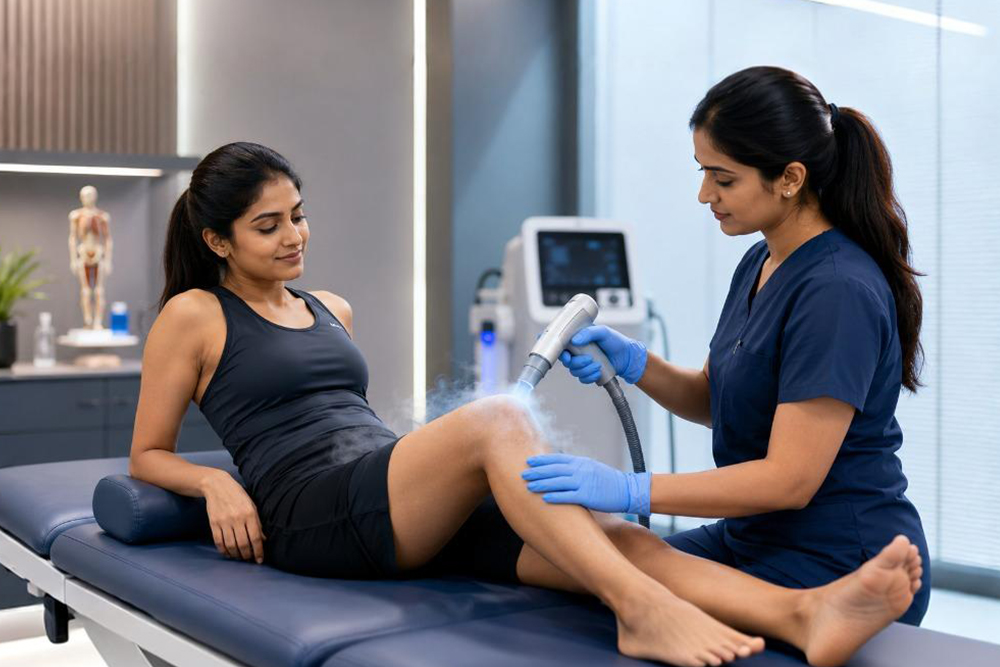
What Is Local Cryotherapy? Benefits, Uses and Recovery Explained
Pain is often the body’s way of signalling that it needs recovery, not simply rest. Every movement, workout and injury places stress on muscles, joints and soft tissues. How effectively the body…
Pain is often the body’s way of signalling that it needs recovery, not simply rest.
Every movement, workout and injury places stress on muscles, joints and soft tissues. How effectively the body responds to that stress influences mobility, performance and long-term musculoskeletal health. This has led to growing interest in advanced recovery therapies that support the body’s natural healing processes rather than simply masking symptoms.
One such therapy is local cryotherapy. By delivering controlled cold therapy directly to a targeted area, it may help reduce pain, swelling and discomfort while supporting recovery as part of a comprehensive rehabilitation programme.
What Is Local Cryotherapy?
Local cryotherapy is a non-invasive treatment that uses controlled exposure to very cold temperatures on a specific area of the body for a short period.
It is commonly used to support recovery in areas such as:Knee, shoulder, elbow, wrist, hip, ankle, lower back and neck.
A typical local cryotherapy session lasts between two and fifteen minutes, depending on the condition being treated and the individual’s clinical needs.
The aim is to temporarily reduce pain, calm inflammation and improve comfort, making it easier for individuals to participate in rehabilitation and return to their daily activities.
How Does Local Cryotherapy Work?
Local cryotherapy uses controlled cold exposure to stimulate the body’s natural response to injury and inflammation. When the targeted area is exposed to intense cold, the small blood vessels temporarily narrow in a process known as vasoconstriction. This may help manage inflammatory responses and temporarily reduce swelling and discomfort within the affected tissues.
Once the treatment is complete, the body gradually returns to its normal temperature. During this rewarming phase, normal circulation gradually returns, supporting the body’s natural recovery processes.
Although local cryotherapy can improve symptoms, it is not intended to heal damaged tissues directly. Instead, it supports the body’s natural recovery process and works best alongside evidence-based rehabilitation.
Who Can Benefit from Local Cryotherapy?
Local cryotherapy is commonly used as part of rehabilitation programmes for a variety of musculoskeletal conditions and sports related injuries.
It may benefit individuals experiencing:
- Muscle strains
- Ligament sprains
- Tendon irritation
- Sports injuries
- Joint discomfort
- Shoulder pain
- Tennis elbow
- Plantar heel pain
- Soft tissue inflammation
- Muscle soreness following exercise
Treatment recommendations always depend on a detailed clinical assessment, the underlying cause of symptoms and the individual’s recovery goals.
Why Is Local Cryotherapy Popular Among Athletes?
Athletes place repeated demands on their muscles, joints and connective tissues. Following intense training or competition, temporary inflammation and muscle soreness are a normal part of recovery.
Exercise induced muscle soreness commonly reaches its peak between 24 and 72 hours after strenuous physical activity. During this period, recovery strategies that improve comfort can help individuals continue with rehabilitation and gradually return to training.
Local cryotherapy has become increasingly popular in sports medicine because it delivers targeted cooling directly to the affected area without exposing the entire body to cold temperatures.
When integrated into a structured recovery programme, it can support comfort after exercise, help manage soreness and improve tolerance to rehabilitation exercises.
Benefits of Local Cryotherapy
Local cryotherapy offers several potential benefits when used as part of a personalised recovery programme.
These include:
- Support for soft tissue recovery
- Reduced muscle soreness after exercise
- Improved comfort during physiotherapy
- Better participation in rehabilitation exercises
- Help managing inflammation related discomfort and swelling
- Support for returning to everyday movement and physical activity
The greatest improvements are typically achieved when local cryotherapy is combined with rehabilitation, strengthening exercises and movement correction rather than being used as a standalone treatment.
Local Cryotherapy Is One Part of a Comprehensive Recovery Plan
Pain is rarely caused by a single factor alone. Muscle weakness, previous injuries, poor movement patterns, joint instability, reduced flexibility and overuse can all contribute to persistent discomfort.
For this reason, effective recovery focuses on identifying and addressing the underlying cause rather than simply reducing symptoms.
At Mitogenez Longevity, every recovery programme begins with a comprehensive clinical assessment to understand the individual’s condition, movement patterns and lifestyle.
Depending on the diagnosis, treatment may include:
- Comprehensive orthopaedic assessment
- Physiotherapy
- Exercise rehabilitation
- Movement retraining
- Muscle strengthening
- Lifestyle optimisation
- Nutritional guidance
- Weight management where appropriate
- Local cryotherapy when clinically indicated
This integrated approach supports better movement, improved function and long-term musculoskeletal health.
Is Local Cryotherapy Suitable for Everyone?
Although local cryotherapy is considered safe for many individuals, it is not appropriate for everyone.
Treatment may not be suitable for people with:
- Severe circulation disorders
- Cold intolerance
- Certain nerve disorders
- Uncontrolled vascular disease
- Some skin conditions affecting the treatment area
- Raynaud’s phenomenon
- Cryoglobulinaemia
- Reduced sensation or nerve problems in the treatment area
- Open wounds or active skin infections
A thorough clinical assessment should always be carried out before treatment to determine whether local cryotherapy is appropriate and safe.
When Should You Seek Professional Advice?
Occasional muscle soreness after physical activity is common. However, persistent pain or swelling should not be ignored.
If you experience pain that lasts for several weeks, ongoing swelling, difficulty walking or performing everyday activities, reduced range of movement, joint instability or recurrent sports injuries, it is important to seek a professional assessment.
Early evaluation helps identify the underlying cause of your symptoms and allows a personalised treatment plan to begin before the condition progresses, supporting more effective recovery and better long term musculoskeletal health..
Consider seeking professional assessment if you experience:
- Pain lasting several weeks
- Persistent swelling
- Difficulty walking or performing everyday activities
- Reduced range of movement
- Joint instability
- Recurrent sports injuries
- Symptoms that continue to worsen
Early assessment helps identify the underlying cause and allows a personalised treatment plan to begin before the condition progresses.
Conclusion
Recovery is not simply about relieving pain. It is about restoring movement, supporting tissue healing and helping the body function at its best.
Local cryotherapy offers a targeted, non-invasive approach to reducing temporary pain and inflammation while supporting rehabilitation for sports injuries, joint discomfort and muscle soreness. When integrated into a personalised recovery programme, it can improve comfort, encourage movement and help individuals progress more confidently through rehabilitation.
At Mitogenez Longevity, local cryotherapy is combined with expert clinical assessment, physiotherapy and tailored rehabilitation to support recovery that goes beyond symptom management. By understanding the underlying causes of pain and focusing on long-term musculoskeletal health, we support individuals to move better, recover stronger and return to the activities they enjoy with greater confidence.
Frequently Asked Questions
Q: Does local cryotherapy heal injuries?
No. Local cryotherapy does not directly repair damaged tissues. It supports the body’s natural recovery process by temporarily reducing pain and inflammation, making rehabilitation more comfortable and effective.
Q: Is local cryotherapy painful?
Most individuals experience an intense cooling sensation during treatment. Sessions are brief and are generally well tolerated when delivered by trained healthcare professionals.
Q: Is local cryotherapy available at Mitogenez Longevity?
Yes. At Mitogenez Longevity, local cryotherapy is offered as part of a comprehensive recovery approach that combines expert assessment, physiotherapy and personalised rehabilitation strategies. The therapy is recommended based on individual symptoms, movement patterns and recovery goals to support better mobility, comfort and overall musculoskeletal health.
Q: How many sessions will I need?
The number of sessions depends on your condition, symptoms and recovery goals. Following assessment, your clinician will recommend a personalised treatment plan.
Q: Can local cryotherapy replace physiotherapy?
No. Local cryotherapy works best alongside physiotherapy, exercise rehabilitation and other evidence-based treatments that address the underlying cause of pain and movement limitations.
Q: Where can I find the best local cryotherapy treatment in India?
Choosing the right local cryotherapy provider depends on clinical expertise, treatment approach and personalised care. At Mitogenez Longevity, local cryotherapy is delivered as part of an integrated recovery programme that combines advanced therapy, expert assessment and rehabilitation support. Each treatment plan is personalised based on the individual’s condition, recovery goals and overall musculoskeletal health needs.
Disclaimer: Local cryotherapy is intended to support recovery and symptom management as part of a personalised care plan. It is not a substitute for medical diagnosis or treatment. Suitability depends on individual health conditions, symptoms and clinical assessment. Always consult a healthcare professional before starting any new therapy or treatment programme.