
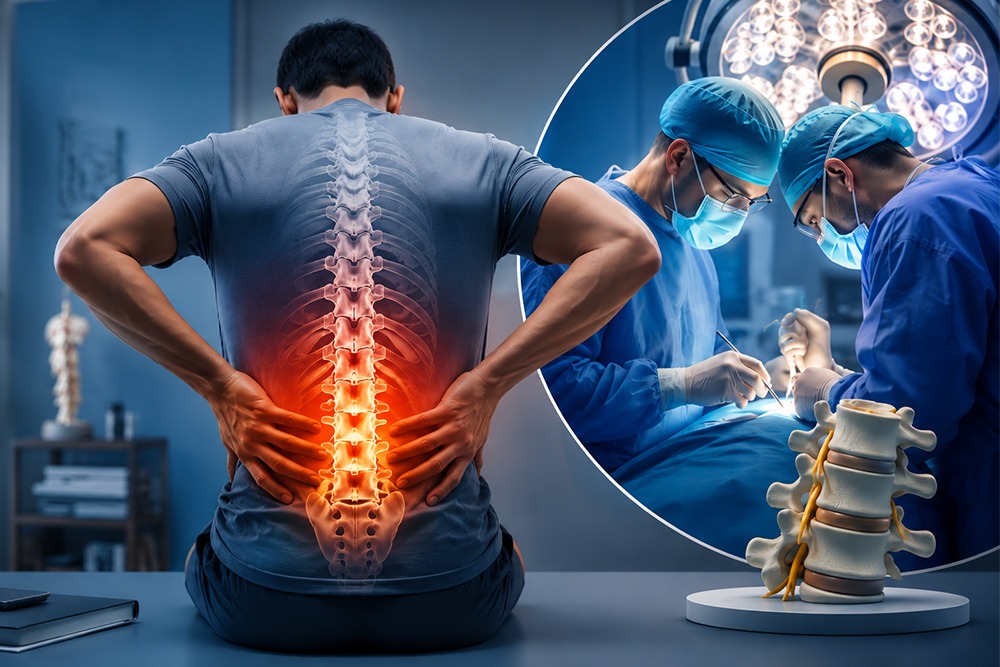
Spine Pain: Understanding the Cause Before Considering Surgery
Spine pain is one of the most common musculoskeletal complaints worldwide and can affect people of all ages. Whether it presents as lower back pain, neck pain or pain travelling into the arms or…
Spine pain is one of the most common musculoskeletal complaints worldwide and can affect people of all ages. Whether it presents as lower back pain, neck pain or pain travelling into the arms or legs, spinal discomfort can have a significant impact on mobility, productivity and quality of life.
When symptoms persist, many people undergo magnetic resonance imaging, commonly known as MRI. Findings such as disc bulges, disc degeneration or slipped discs often sound alarming and may create the impression that surgery is inevitable.
However, research and clinical experience suggest that the relationship between imaging findings and pain is often far more complex.
Understanding Spine Pain
The spine is a complex structure made up of vertebrae, discs, joints, ligaments, muscles and nerves. These structures work together to provide stability, flexibility and protection for the spinal cord.
Pain can arise from several different tissues within and around the spine. While spinal discs often receive the most attention, they are only one possible source of symptoms.
Common contributors to spine pain include:
- Intervertebral discs
- Facet joints
- Sacroiliac joints
- Muscles and soft tissues
- Ligaments
- Nerve irritation
- Mechanical stress and movement dysfunction
Identifying the precise source of pain is often more important than focusing solely on what appears on an MRI scan.
What Does a Disc Bulge Mean?
A disc bulge occurs when part of an intervertebral disc extends beyond its normal boundaries. Disc degeneration refers to age related changes that occur naturally over time as the discs gradually lose hydration and elasticity.
Although these findings can sound concerning, they do not automatically explain pain.
Numerous studies have shown that many people without any symptoms have disc bulges, disc degeneration and other spinal changes visible on MRI scans. In many cases, these findings represent normal age related changes rather than a direct cause of pain. The significance of these findings depends on the individual’s symptoms, clinical examination and overall presentation.
A useful comparison is grey hair. The presence of grey hair does not indicate illness. Similarly, some spinal changes may simply reflect the natural ageing process.
This is why MRI findings should always be interpreted alongside a detailed clinical assessment rather than in isolation.
Why MRI Is Only Part of the Story
Modern imaging technology provides valuable information about spinal anatomy. However, imaging cannot always determine which structure is generating pain.
For example, a person may have a disc bulge visible on MRI while their symptoms are actually arising from irritated facet joints, muscle strain or dysfunction of the sacroiliac joint.
Conversely, another person may have significant imaging findings but experience little or no pain.
This highlights an important principle in spinal care. The scan should support the clinical diagnosis, not replace it.
A comprehensive assessment typically includes:
- Detailed symptom history
- Physical examination
- Neurological assessment
- Functional movement evaluation
- Review of imaging findings where appropriate
Combining these factors helps clinicians develop a more accurate understanding of the source of symptoms.
Is It Really Nerve Pain?
Many people assume that any pain in the back, buttock or leg must be related to a trapped nerve. In reality, not all pain travelling into the lower limb originates from nerve irritation.
True nerve related pain often has distinct characteristics.
Common features may include:
- Pain travelling below the knee
- Leg pain greater than back pain
- Numbness or tingling
- Muscle weakness
- Changes in sensation
Pain that remains primarily in the lower back, buttock or upper thigh may arise from muscles, joints or other soft tissues rather than the nerves themselves.
Because management approaches differ depending on the underlying cause, accurate diagnosis is essential.
Common Causes of Spine Pain
Facet Joint Pain: Facet joints are small joints located at the back of the spine. They help guide movement and provide stability.
When these joints become irritated or inflamed, they can produce localised pain, stiffness and discomfort during movement.
Sacroiliac Joint Dysfunction: The sacroiliac joints connect the spine to the pelvis. Dysfunction in these joints can mimic symptoms commonly attributed to disc problems.
Pain is often felt in the lower back, buttock or upper thigh.
Muscle and Soft Tissue Strain: Overuse, poor posture, prolonged sitting, repetitive movements and inadequate conditioning can place excessive strain on spinal muscles.
Muscular pain frequently causes stiffness, tenderness and reduced mobility.
Disc Related Pain: In some cases, discs can contribute to pain through inflammation, structural changes or irritation of nearby nerves.
However, the presence of a disc bulge alone does not confirm that the disc is responsible for symptoms.
Non-Surgical Approaches to Spine Pain
Most episodes of spine pain improve without surgery. Conservative management remains the first line approach for many patients.
Treatment plans vary depending on the underlying cause but may include several strategies.
Physiotherapy and Rehabilitation: Exercise based rehabilitation can help improve movement patterns, strengthen supporting muscles and enhance overall spinal function.
A structured physiotherapy programme often focuses on:
- Mobility
- Core stability
- Strength
- Functional movement
- Postural awareness
Image Guided Injections
For carefully selected patients, image guided procedures may help reduce pain and inflammation.
Examples include:
- Epidural injections for inflamed nerve roots
- Nerve root blocks
- Facet joint injections
- Sacroiliac joint injections
These procedures are designed to target specific pain generators identified during clinical assessment.
Radiofrequency Ablation
Radiofrequency ablation may be considered in certain cases of chronic facet joint pain. The procedure aims to reduce pain signals from selected nerves that may be contributing to symptoms.
Suitability depends on clinical findings and prior diagnostic testing.
Regenerative and Recovery Focused Approaches
Once pain is better controlled, additional therapies may be used to support rehabilitation and recovery.
Depending on individual circumstances, clinicians may consider options such as platelet rich plasma, growth factor based therapies, physiotherapy, exercise programmes and other supportive interventions where clinically appropriate.
The goal remains to improve function, movement and quality of life while encouraging long term recovery.
Lifestyle Factors That Influence Spine Health
Spine pain is rarely influenced by anatomy alone. Lifestyle factors can significantly affect symptoms and recovery.
Important considerations include:
Physical Activity: Regular movement helps maintain strength, flexibility and spinal function. Extended periods of inactivity can contribute to stiffness and deconditioning.
Body Weight: Excess body weight may increase mechanical stress on the spine and surrounding structures.
Sleep Quality: Poor sleep has been associated with increased pain sensitivity and slower recovery.
Stress and Mental Wellbeing: Psychological stress can influence pain perception and muscle tension. Addressing stress is often an important part of comprehensive care.
Metabolic Health: Inflammation, insulin resistance and overall metabolic health may influence pain, healing and physical resilience.
At Mitogenez Longevity, these broader health factors form part of a holistic approach to musculoskeletal wellbeing.
When Is Surgery Necessary?
Although many people improve without surgery, there are situations where surgical evaluation becomes important.
These may include:
- Progressive muscle weakness
- Significant neurological deficits
- Loss of bladder or bowel control
- Severe nerve compression supported by clinical findings and imaging
- Persistent symptoms that do not respond to appropriate conservative care
In these situations, timely surgical assessment may be necessary to prevent further complications.
The decision to proceed with surgery should always be based on a combination of symptoms, examination findings and imaging results rather than MRI findings alone.
Conclusion
Spine pain is often more complex than a scan result. While MRI findings such as disc bulges and degeneration can appear concerning, they do not automatically explain symptoms or indicate the need for surgery. Many individuals with these findings experience little or no pain, while others may have symptoms arising from joints, muscles or other structures that are not immediately obvious on imaging.
A thorough clinical assessment remains the foundation of effective spinal care. Understanding the relationship between symptoms, physical findings and imaging results allows for more informed and individualised treatment decisions.
At Mitogenez Longevity, we believe that spine pain should be approached through careful evaluation, evidence informed decision making and a focus on restoring movement, function and long-term wellbeing. By looking beyond the scan and considering the whole person, it is often possible to identify effective strategies that support recovery and help individuals maintain an active and healthy life.
Disclaimer: This article is for educational purposes only and should not be considered medical advice. Treatment suitability varies and is determined through individual clinical assessment.